
Most Inspection Deficiencies Are Predictable
After reviewing thousands of fire and life safety inspections across commercial and residential properties, one thing is clear:
The same issues appear again and again.
Not because they are difficult to correct—but because they are difficult to monitor consistently across buildings, vendors, systems, and documentation requirements.
The good news? Most compliance deficiencies can be prevented long before an inspector arrives.
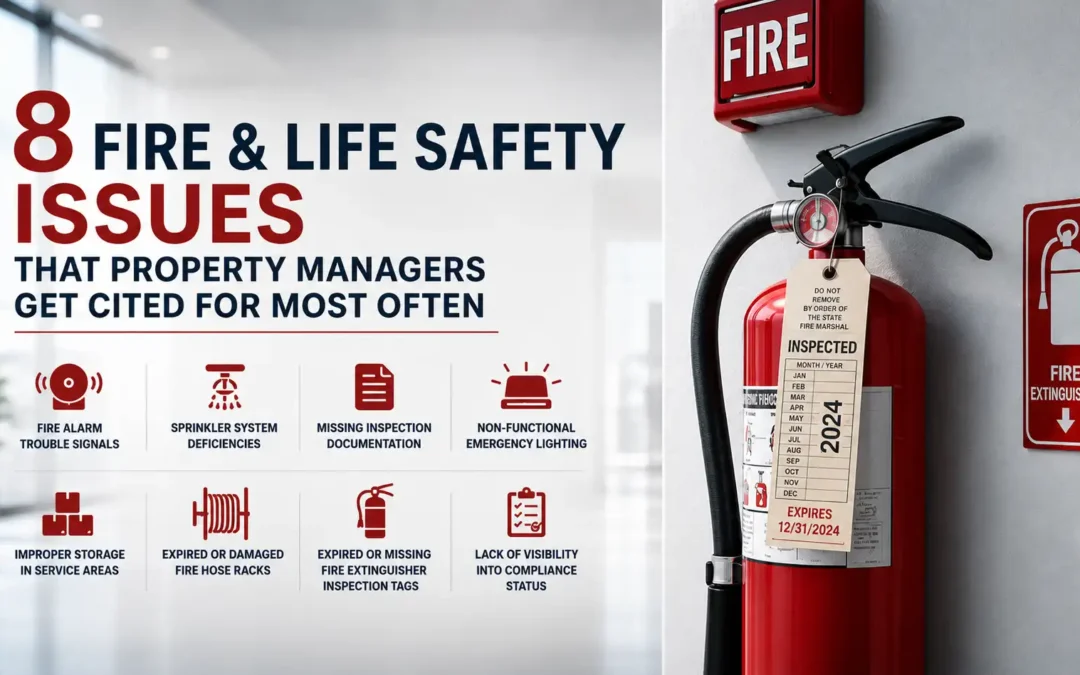
The Top 8 Issues That Get Buildings Flagged
1. Unresolved Fire Alarm Trouble Signals
A trouble signal may seem minor, but if left unresolved, it can quickly become a compliance issue.
How to prevent it:
Establish a process for tracking, escalating, and resolving alarm deficiencies promptly, with clear documentation of corrective actions.
2. Deficiencies in Sprinkler Systems
Closed valves, damaged sprinkler heads, missing escutcheons, or obstructed sprinkler coverage are among the most common issues inspectors identify.
How to prevent it:
Perform routine visual inspections and address deficiencies immediately rather than waiting for the next scheduled inspection cycle.
3. Expired or Missing Inspection Records
Even when systems are functioning properly, missing documentation can result in compliance findings.
How to prevent it:
Maintain organized, readily accessible records for all inspections, testing, maintenance, repairs, and certifications.
4. Non-Functional Emergency and Exit Lighting
Emergency lighting and illuminated exit signs are frequently overlooked until an inspection or emergency occurs.
How to prevent it:
Implement routine monthly checks and promptly replace failed batteries, lamps, or fixtures.
5. Improper Storage in Mechanical, Electrical, or Utility Rooms
Storage encroaching on electrical panels, fire protection equipment, or egress pathways remains one of the most common violations in both office and residential buildings.
How to prevent it:
Clearly designate required clearance areas and routinely inspect building service spaces for compliance.
6. Expired or Damaged Fire Hose Equipment
Fire hose racks and valves with expired inspection tags, damaged hoses or pressure gauges, missing nozzles, or improperly maintained equipment are common inspection findings that can result in compliance violations.
How to prevent it:
Include fire hose racks and valves in your routine inspection program, verify that inspections and testing are performed on schedule, and promptly repair or replace damaged components.
7. Expired or Missing Fire Extinguisher Inspection Tags
Fire extinguishers are among the most visible life safety devices in a building, yet expired inspection tags, overdue maintenance, or missing documentation remain common inspection findings.
How to prevent it:
Ensure all portable fire extinguishers are inspected monthly, maintained annually, and hydrostatically tested as required. Maintain clear records and routinely verify that inspection tags are current and properly attached.
8. Lack of Visibility Into Building Compliance Status
The most significant issue is often not a single deficiency—it is the inability to quickly answer a simple question:
“Are we compliant right now?”
When inspection records, deficiencies, repairs, and vendor reports exist in multiple locations, maintaining confidence in compliance becomes difficult.
How to prevent it:
Centralize compliance information and create a single source of truth for building fire and life safety systems.
Why These Issues Occur
Property and facilities teams are often managing:
- Multiple vendors
- Multiple building systems
- Different inspection schedules
- Changing regulatory requirements
- Tenant demands and operational priorities
Without a consistent process and centralized visibility, compliance gaps become almost inevitable.
The Shift: From Managing Violations to Managing Compliance
High-performing property management organizations don’t simply respond to inspection findings. They build systems that reduce the likelihood of violations occurring in the first place.
That means:
- Standardizing inspection and maintenance processes
- Centralizing documentation and reporting
- Tracking deficiencies through resolution
- Improving visibility across properties and vendors
- Creating accountability for ongoing compliance
Final Thought
If the same deficiencies continue appearing inspection after inspection, the problem usually isn’t the building. It’s the process behind the building. The organizations that maintain the highest levels of compliance don’t just manage fire protection systems. They manage compliance as an ongoing operational discipline.
Most building fire and life safety inspection deficiencies aren’t surprises.
After thousands of inspections, the same issues consistently appear:
- Unresolved fire alarm trouble signals
- Sprinkler system deficiencies
- Missing inspection documentation
- Failed emergency lighting
- Storage blocking electrical or fire protection equipment
- Fire doors that don’t close properly
- Expired or missing fire extinguisher inspection tags
- Lack of visibility into overall compliance status
None of these are particularly complex. But when you’re managing multiple vendors, multiple systems, and multiple properties, small issues can quickly become compliance risks.
The biggest takeaway? It’s rarely a building problem. It’s usually a process problem.
Recent Comments