
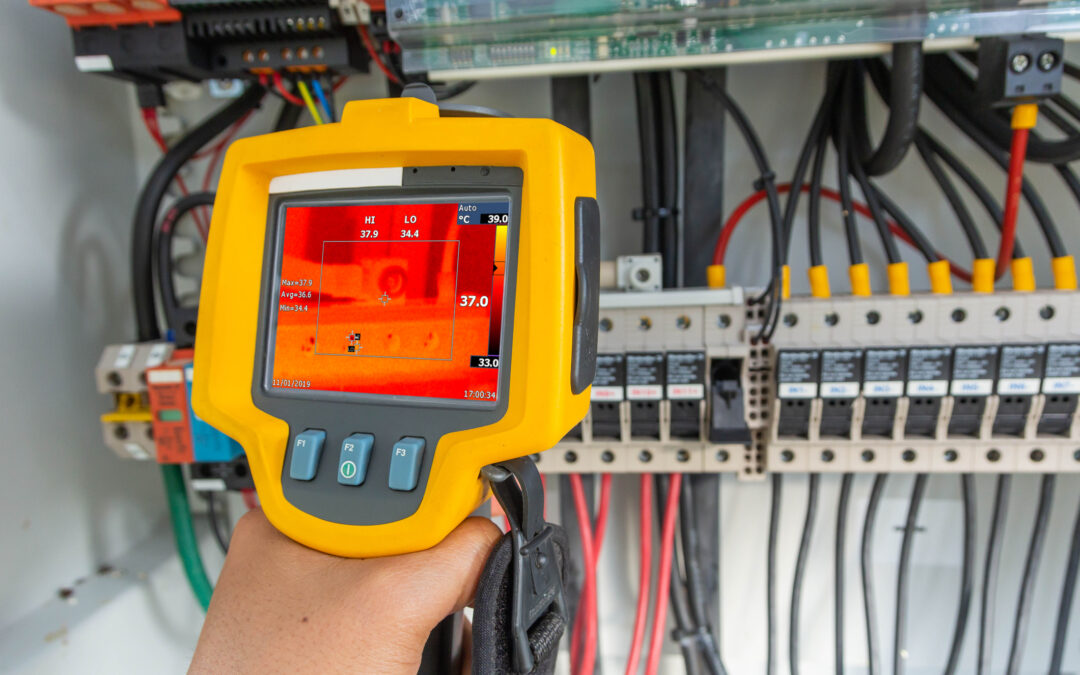
Infrared imaging is no longer just a best practice — it’s a critical component of modern facility protection.
Infrared thermography uses advanced thermal imaging cameras to detect temperature variations invisible to the naked eye. Overheating electrical connections, overloaded circuits, failing breakers, stressed mechanical components, and hidden roof moisture all produce heat signatures that signal trouble. Identifying these issues early allows corrective action to be taken before they result in fire, equipment failure, costly downtime, or business interruption.
Compliance Is No Longer Optional
In 2023, NFPA 70B – Standard for Electrical Equipment Maintenance was updated, elevating infrared inspections from a recommended practice to a mandatory component of an effective electrical maintenance program. The NFPA 70B standard applies to almost all industrial, commercial, and large multi-family residential facilities. Facilities that fail to conduct and document thermal imaging inspections risk falling out of compliance with nationally recognized safety standards.
The Risks of Skipping Thermal Imaging
Non-compliance with the 2023 NFPA 70B standard creates significant risks, including:
- Safety and Life Hazards: Increased likelihood of electrical explosions, arc flashes, fires, and fatalities, as neglected equipment becomes unsafe.
- Regulatory Fines and Legal Liability: OSHA enforces the standard, meaning improper maintenance can trigger, severe penalties. Non-compliance also creates legal liability in the event of injury or property damage.
- Operational Disruption: Increased, unexpected equipment failures lead to costly, unplanned outages and emergency repairs, which can cost businesses millions in lost productivity.
- Financial and Insurance Impacts: Higher insurance premiums, denied insurance claims, or cancelled policies, as insurers increasingly demand compliance.
- Unexpected downtime and major repairs: Small thermal anomalies can escalate into catastrophic failures when left unaddressed.
To avoid these risks, organizations must develop a formal, documented Electrical Maintenance Program (EMP) that includes regular inspections, testing, and servicing.
At RAEL Fire Protection, we are continually expanding our services to help building owners and facility managers stay ahead of risk. Our Infrared & Thermal Imaging Services for electrical, mechanical, and roof systems provide a powerful layer of predictive maintenance designed to prevent failures before they become emergencies.
RAEL’s certified thermography services provide detailed reporting, prioritized findings, and actionable recommendations — giving you the documentation you need for insurers, regulators, and internal risk management.
For more information download our info sheet, “Infrared Compliance Simplified”, here.
Contact us today to integrate thermal imaging into your preventive maintenance strategy.
Recent Comments