
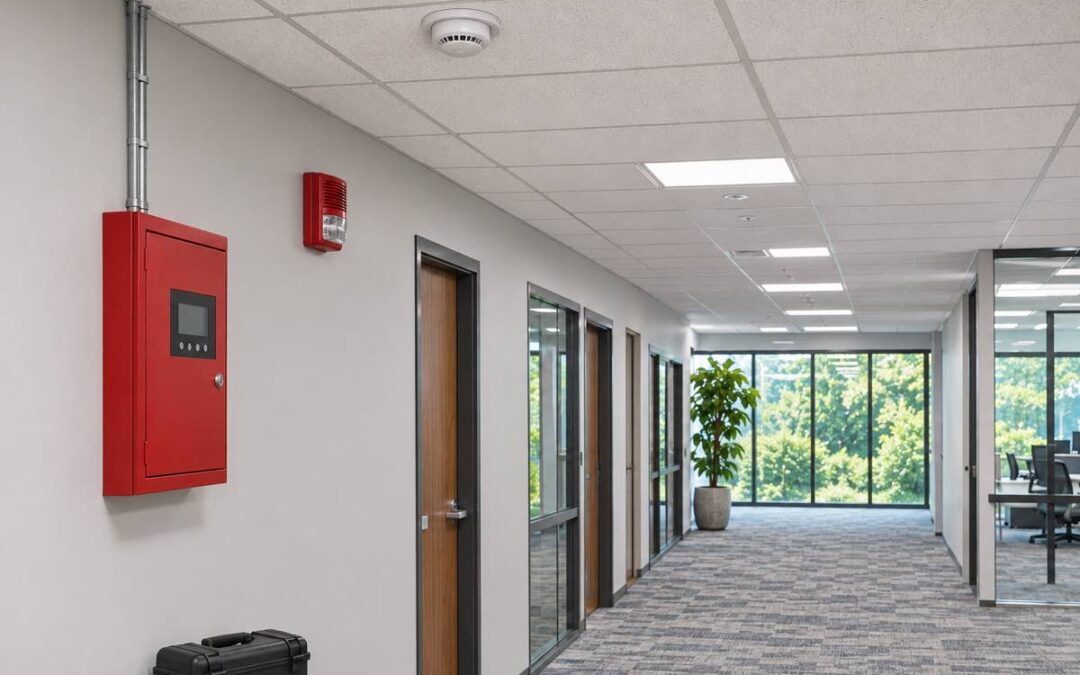
Your annual fire alarm inspection is coming up, and you’re not sure which devices the technician will test or what your building needs beforehand. It’s a common concern for property managers responsible for coordinating inspections.
An inspection involves more than confirming that the alarm sounds. Visual inspections and functional testing help identify equipment deficiencies, verify required system functions, and support compliance with applicable fire safety requirements. They’re an important part of maintaining your building’s fire protection systems.
So, what does an annual inspection cover, how often do different components need attention, and what should you do to prepare? Here’s what to know before your next scheduled visit.
What Is an Annual Fire Alarm Inspection?
An annual fire alarm inspection is part of the scheduled inspection, testing, and maintenance program required to keep commercial fire alarm systems operating properly and meet applicable local fire codes.
The process includes two distinct activities:
- Visual inspections: Technicians examine fire alarm system components, such as smoke detectors, heat detectors, pull stations, and the control panel, for visible damage, obstructions, improper conditions, or other deficiencies.
- Functional testing: Qualified technicians test applicable devices and system functions to verify that they respond and operate as required, including the transmission of alarm signals where applicable.
Results are recorded in inspection and testing reports, along with deficiencies that need corrective actions.
Building owners or their designated representatives are responsible for ensuring required fire alarm system inspections, testing, and maintenance are completed according to applicable regulations and inspection schedules. Specific requirements depend on the installed equipment and governing codes.
How Often Should Fire Alarm Systems Be Inspected?
Fire alarm inspection and testing schedules vary by component. An annual visit covers many required activities, but some equipment needs attention more frequently.
Annual inspection and testing requirements
Under applicable codes and standards, many fire alarm components require annual inspection or functional testing. This may include notification appliances, such as horns and strobes, communication equipment, and other system functions.
The exact scope depends on the installed equipment and applicable requirements.
Other required inspection and testing intervals
Not every component follows an annual schedule. Depending on the system and governing rules, requirements may include:
- Daily or routine checks by designated building personnel.
- Monthly activities for certain equipment or supervisory responsibilities.
- Quarterly inspections and semi-annual inspections for specified components.
- Longer-term testing or maintenance at intervals established by applicable standards.
These activities are not interchangeable. The required frequency depends on the adopted edition of NFPA 72, the National Fire Alarm and Signaling Code, local amendments, and system design.
Do inspection requirements differ across the Tri-State area?
Yes. New York City applies its Fire Code, Fire Rules, and referenced standards. Other jurisdictions in New York, New Jersey, and Connecticut may adopt different editions or amendments.
Confirm the requirements with your qualified fire alarm service provider and the local authority having jurisdiction.
Annual Fire Alarm Inspection Checklist: What Gets Checked?
The exact checklist depends on your fire alarm system components, building type, and applicable code requirements. Here’s what technicians typically examine during scheduled inspections and testing.
Fire alarm control panel and power supplies
The control panel is the central point for monitoring your fire alarm system. Technicians check its physical condition, indicators, and displayed alarm, trouble, or supervisory signals.
They also verify primary and secondary power supplies, including backup batteries. Applicable testing helps determine whether the system can continue operating during a power outage.
Smoke detectors, heat detectors, and pull stations
Initiating devices require both visual inspections and functional testing at their prescribed intervals. Technicians check smoke detectors, heat detectors, and manual pull stations for damage, obstructions, and accessibility. When testing is due, they use approved methods to verify device operation.
For example, smoke detectors are tested using appropriate smoke-entry methods, while heat detectors require procedures suited to their type. Manual pull stations are operated to verify alarm activation.
Specialized equipment, including duct smoke detectors, is also inspected and tested where installed and required. Methods and frequencies vary by device.
Horns, strobes, and emergency communication equipment
Notification appliances help alert occupants when an alarm activates. During required testing, technicians verify that horns, strobes, and other notification devices operate as intended. They also check for visible damage or conditions that could interfere with their operation.
Buildings equipped with voice evacuation or emergency communication systems require additional testing of applicable functions.
Monitoring and connected building systems
Where supervising station monitoring is provided, testing includes verifying required alarm, supervisory, and trouble signal transmission through the applicable communication pathway.
Technicians also check required interfaces with other building equipment. These may include sprinkler waterflow switches, valve supervisory devices, elevator recall controls, and HVAC shutdown functions.
Testing interconnected systems may require coordination with elevator, sprinkler, or mechanical contractors.
Inspection records and deficiency documentation
After testing, technicians document the results, including devices or functions that did not operate as required.
Reports identify deficiencies and corrective actions needed to restore proper operation. Building owners and property managers should retain these reports alongside maintenance records for future reference and regulatory review.
Keeping accurate documentation also helps track recurring issues and plan necessary repairs.
How to Prepare for an Annual Fire Alarm Inspection
Preparing ahead of time helps technicians complete the required inspection and testing efficiently while minimizing disruption to your building’s operations. Here’s what property managers should do before the scheduled visit.
- Review previous inspection reports. Check for unresolved deficiencies, incomplete repairs, or recurring issues. Share this information with your fire protection provider so technicians know which areas may need attention.
- Gather system documentation. Have previous inspection reports, maintenance records, available system drawings, and equipment information ready. These documents help technicians understand the installed system and its service history.
- Arrange access to equipment. Make sure inspectors can reach the control panel, smoke and heat detectors, pull stations, and other devices. Coordinate access to locked rooms, tenant spaces, and restricted areas beforehand.
- Notify occupants and building personnel. Let tenants, employees, and relevant staff know when testing is scheduled. Explain that alarms or emergency announcements may sound during the visit.
- Coordinate with monitoring providers and contractors. Your fire alarm service provider should arrange any necessary monitoring notifications and testing procedures. Elevator, sprinkler, or mechanical contractors may also need to participate.
- Confirm system restoration. Before technicians leave, confirm that testing is complete, temporary test conditions have been cleared, affected services have been restored, and outstanding deficiencies are documented.
Any temporary system impairment or monitoring interruption must follow applicable notification and impairment procedures. Leave system disabling, testing controls, and restoration to authorized personnel.
What Happens If Your Fire Alarm System Fails an Inspection?
If your fire alarm system fails part of an inspection, it doesn’t necessarily mean the entire system is inoperable. The issue could involve a damaged smoke detector, a malfunctioning notification device, a trouble signal, or another deficiency that needs attention.
The inspection report should identify the affected equipment, document the findings, and outline necessary corrective actions. Depending on the problem, your building may need repairs, replacement components, or additional testing.
More serious deficiencies that impair required fire alarm functions may trigger notification requirements or temporary protective measures under applicable fire codes. The appropriate response depends on the nature of the impairment and the requirements of the local authority having jurisdiction.
Once corrective work is completed, affected devices or system functions may need to be retested to verify proper operation.
Addressing deficiencies promptly helps reduce safety risks, prevent recurring system problems, and maintain compliance with applicable inspection and maintenance requirements.
Who Can Perform a Commercial Fire Alarm Inspection?
Commercial fire alarm inspections and testing must be performed by personnel who meet the qualifications required under applicable codes, standards, and local regulations.
In New York City, applicable fire alarm inspection, testing, and service work must be performed by appropriately certified technicians working for FDNY-recognized fire alarm companies. Routine supervisory checks by designated building personnel are different from the professional functional testing required for system components.
Requirements elsewhere in New York, New Jersey, and Connecticut may differ, so it’s important to confirm the qualifications required in your jurisdiction.
Before scheduling an inspection, ask your contractor about their certifications, experience with your type of fire alarm system, and the services included.
At RAEL Fire Protection, our NICET-certified specialists bring technical expertise and familiarity with applicable fire safety requirements to commercial fire alarm inspection and testing services.
Keep Your Fire Alarm Inspections on Schedule With RAEL
Managing inspection schedules, service records, and necessary repairs can be challenging, especially when you’re responsible for multiple commercial properties.
At RAEL Fire Protection, we provide fire alarm inspection, testing, maintenance, and repair services throughout the New York Tri-State area. Our qualified specialists understand applicable fire protection requirements and help property managers address system deficiencies.
We also use our REDi technology platform to support inspection tracking, service documentation, and maintenance management, making it easier to stay organized.
Explore our Fire Alarm services, or contact us to discuss your building’s requirements and schedule annual fire alarm inspection and testing services.
Frequently Asked Questions
How long do fire alarm system inspections take?
The duration of fire alarm system inspections depends on the building’s size, number of devices, system complexity, and accessibility. Larger properties with multiple floors or interconnected systems generally require more time. Your fire protection provider can estimate the inspection duration after reviewing your system.
What does annual testing of a fire alarm system include?
Annual testing verifies the operation of applicable fire alarm devices and system functions. Depending on the equipment and governing requirements, this may include initiating devices, notification appliances, control equipment, and alarm signal transmission.
Not every component follows the same testing schedule, so the scope must reflect applicable codes and standards.
Does building type affect fire alarm inspection requirements?
Yes. Building type, occupancy classification, installed equipment, and applicable local fire codes can influence inspection and testing requirements.
For example, a healthcare facility or high-rise building may have more complex fire alarm and emergency communication systems than a small commercial office. Inspection procedures must account for those differences.
What records should property managers keep after a fire alarm inspection?
Property managers should retain completed inspection and testing reports, documented deficiencies, maintenance records, and evidence of corrective actions. These records help track recurring problems, demonstrate completed work, and support regulatory reviews. Required record retention periods depend on applicable codes and local regulations.
Recent Comments